

UX CASE STUDY
AI-Enabled Form Builder Experience
Making a Complex Form Builder Faster to Learn—and Faster to Use
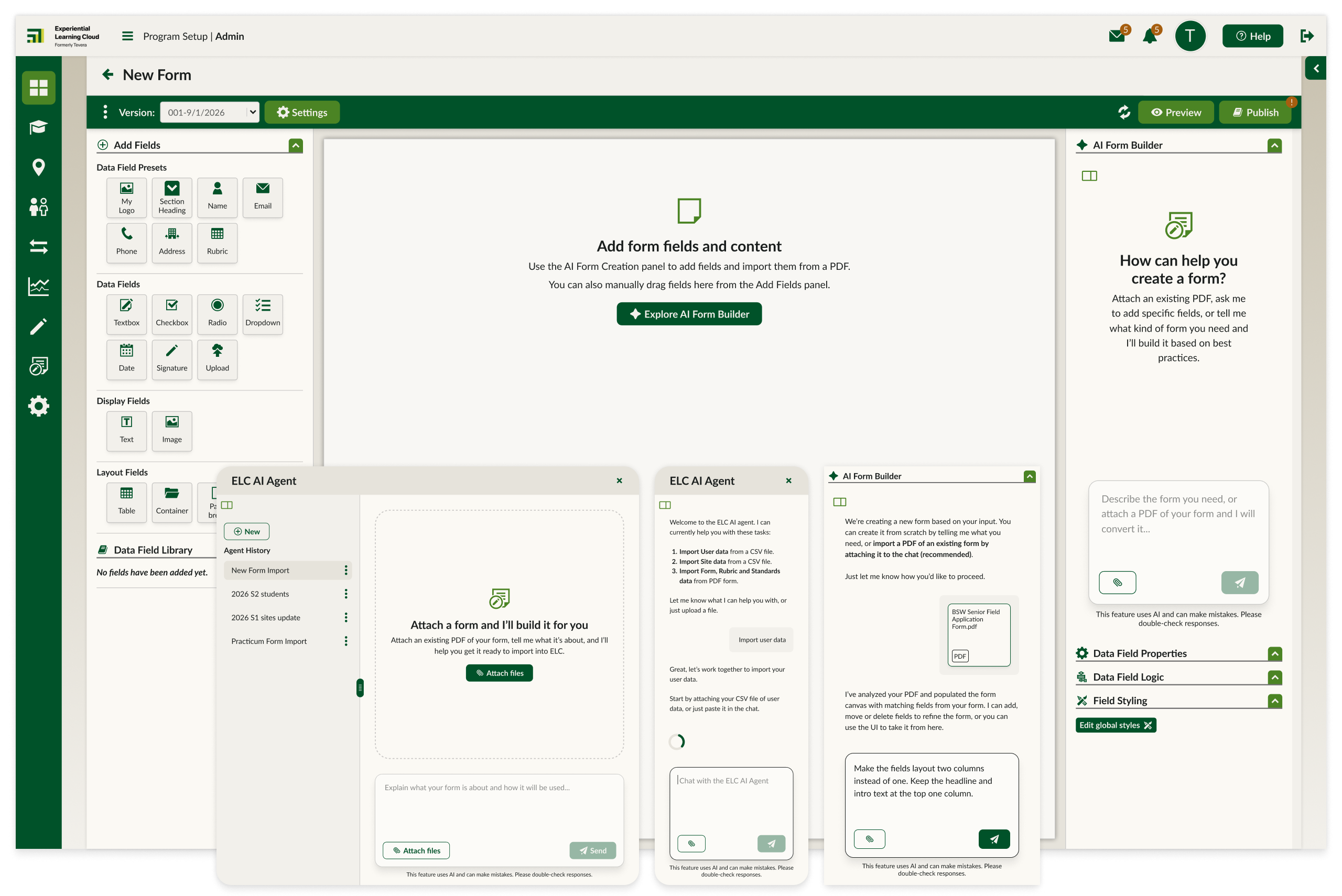
To speed up the work of expert users and reduce the learning curve for new users, I made improvements to balance learnability and efficiency.
TL;DR
1 hour saved per form. I redesigned the Form Builder and introduced task-specific AI agents for importing and editing, reducing the manual work required to create data-connected forms.
P roblem Space
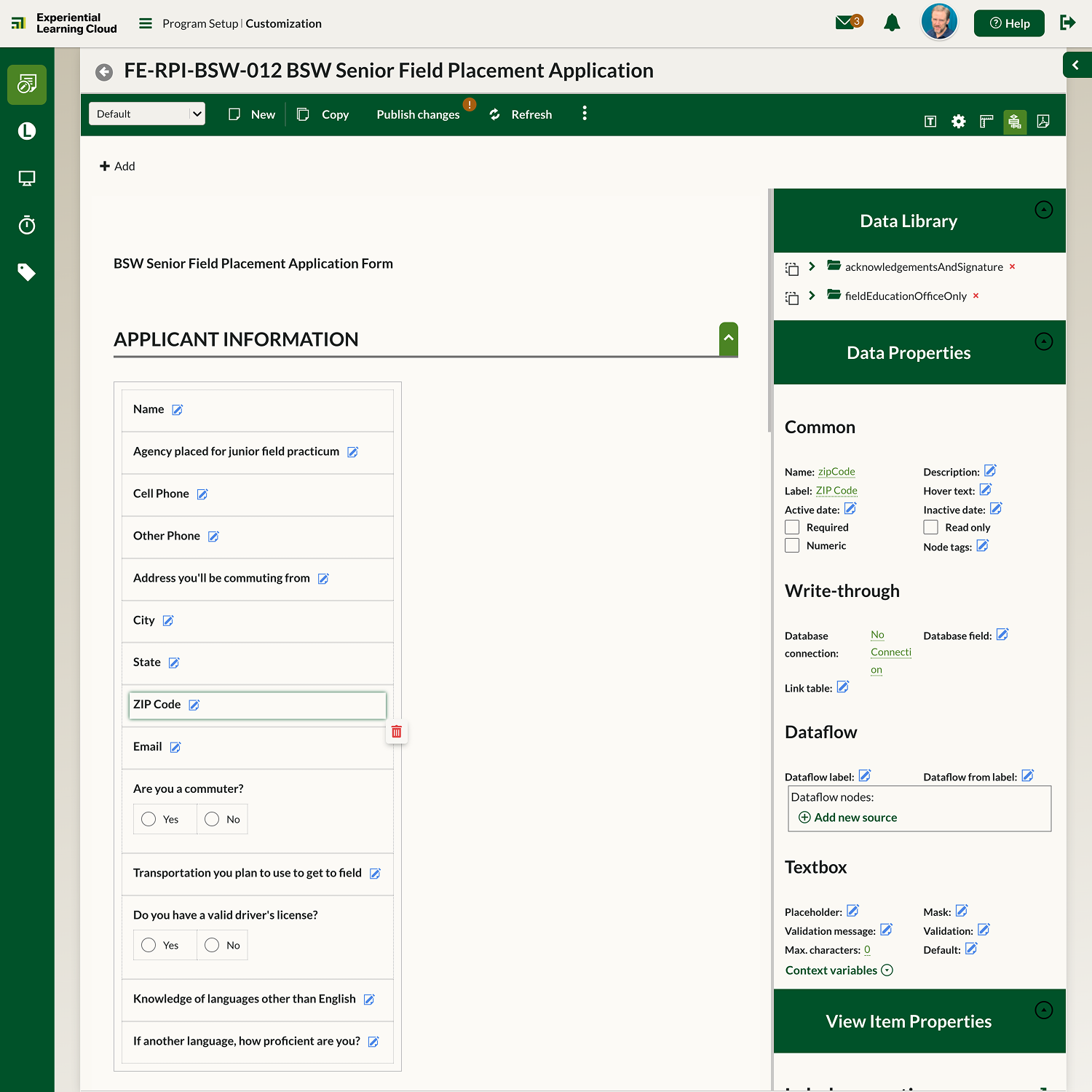
ELC’s Form Builder enables college administrators to create data-connected forms used throughout the experiential learning process. But the legacy workflow was complex enough that form creation often depended on internal experts to configure it correctly. This created two problems: new users faced a steep learning curve, while experienced users spent significant time on repetitive setup work. The opportunity was to make the system easier to learn without sacrificing the power and efficiency expert users relied on.
The Design Strategy
- Create a foundation for AI interaction – I designed a reusable conversational UI component that could support the immediate AI workflows while establishing patterns for future agentic experiences. The component incorporates best-practice CUI design patterns and task-specific empty states.
- Automate the most time-consuming tasks – Rather than introducing AI as a general-purpose chatbot, my team focused on two high-value workflows: importing and editing forms. My task was to integrate these agents into existing user workflows.
- Make the underlying system easier to learn – AI could accelerate experienced users, but it wouldn’t solve the underlying usability problems. I therefore redesigned key areas of the legacy Form Builder to improve consistency, discoverability, and learnability: new empty states, progressive UI disclosure, and overall UI consistency.
Results
- 1 hour saved per form, on average.
- New users can more easily learn and navigate the experience.
What’s next?
The conversational UI establishes a reusable foundation for future AI-assisted workflows across ELC. The longer-term opportunity is to help users accomplish complex tasks across the product without requiring them to understand every underlying system detail.